
Seed Oils: The Ingredient You Never Chose
The short answer
Seed oils are refined oils from soybean, corn, canola, cottonseed, sunflower and safflower, and Americans now eat vastly more of them than a century ago. Part of the case against them is established: they break down into toxic aldehydes under repeated high heat, and their main fat, omega-6 linoleic acid, competes with the omega-3 fats linked to brain health and recovery. Part is emerging, including a controlled trial in which cutting omega-6 while adding omega-3 reduced headache days in people with migraine by four a month. The long term heart question is still contested. Elevated Eats keeps seed oils out of every meal anyway, with six checkpoints from menu design and ingredient tracking to receipt review.
Picture a Tuesday in the middle of your season, or your quarter. You were up at six. You trained. You slept eight hours. At dinner you did everything right: the best restaurant in the city, the grilled salmon, the vegetables, no bread.
In a lot of kitchens, that salmon was seared in canola oil. The vinaigrette on those vegetables may well have been built on soybean oil. The fries on the next plate came out of a fryer that had been hot since lunch.
You made every decision you were given. The oil was never one of them.
This article is about that ingredient. It is not a scare piece. The science on seed oils is louder than it is settled, and you deserve to know which parts are proven, which are promising, and which are still argued over. Then you will see why Elevated Eats decided not to wait for the argument to end.
What seed oils actually are
Seed oils are refined oils extracted from the seeds of industrial crops: soybean, corn, canola, cottonseed, sunflower, safflower and grapeseed. On an ingredient list they often appear simply as vegetable oil.
Most commercial seed oils are extracted with a solvent such as hexane, then refined, bleached and deodorized so they taste of nothing and last on a shelf. Most are rich in linoleic acid, an omega-6 fat. That fat is the thread running through nearly all of the research below.
Oils pressed from fruit, like olive oil and avocado oil, are not seed oils. Neither are butter, ghee or tallow.
A century-long experiment nobody signed up for
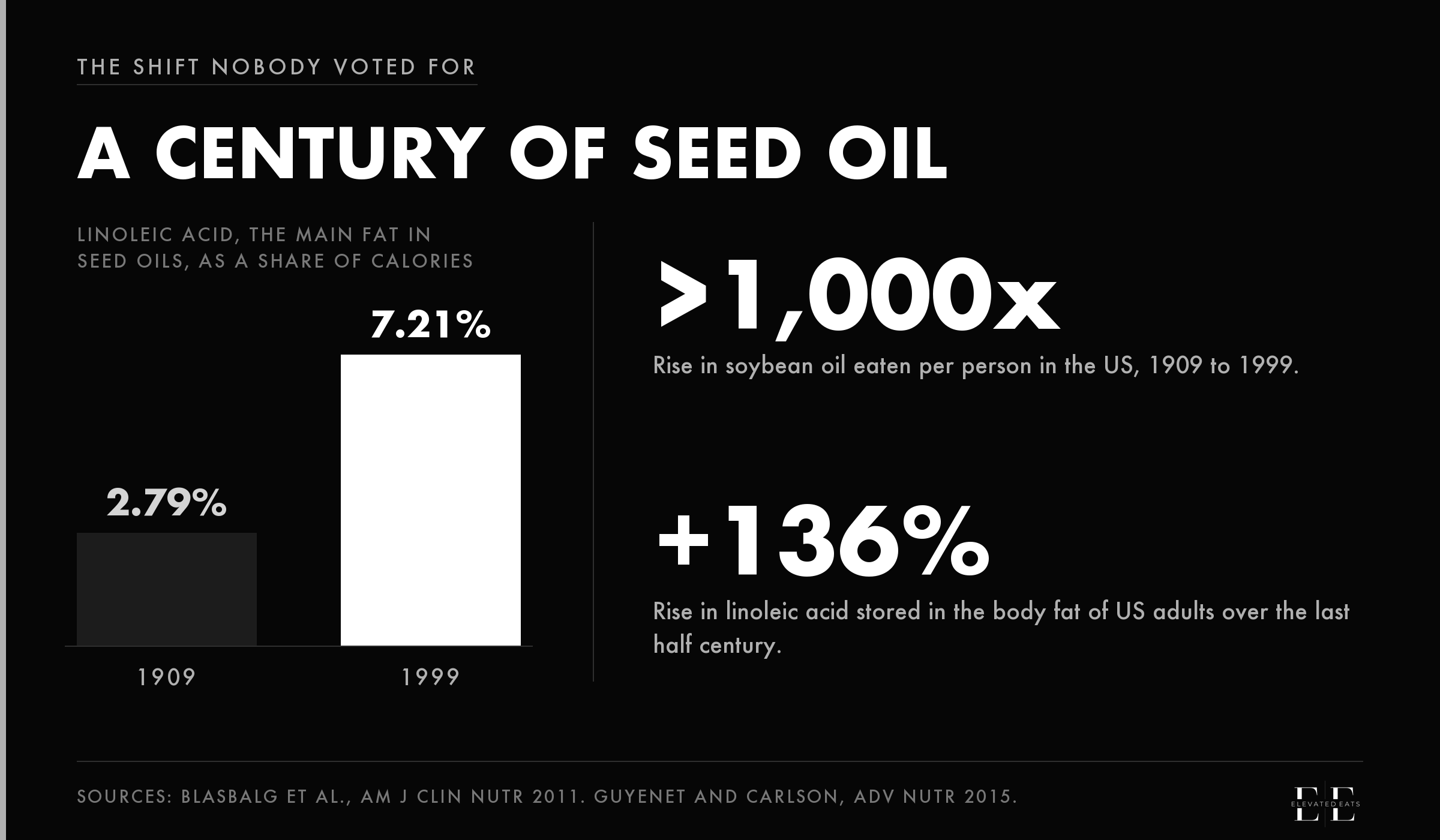
Researchers at the National Institutes of Health reconstructed what Americans ate from 1909 to 1999. Over those ninety years, the soybean oil eaten per person rose more than a thousandfold, and linoleic acid went from 2.79% of calories to 7.21%.
Your body keeps the receipt. The fat stored in your tissue reflects what you have eaten over years, and a 2015 review of US studies found that the linoleic acid in American adults' body fat rose 136% over the last half century. One widely cited review estimates that humans evolved eating roughly as much omega-6 as omega-3, and that Western diets now run around 15 to 1.
Nobody voted for this. It happened because seed oils are cheap, neutral in flavor and stable on a shelf, which made them the most convenient fat in the food supply.
What the evidence says, and what it does not
There are two loud camps. One says seed oils are poison. The other says the concern is a myth. Both skip the part that matters: the evidence comes in different strengths, and it should be read that way.
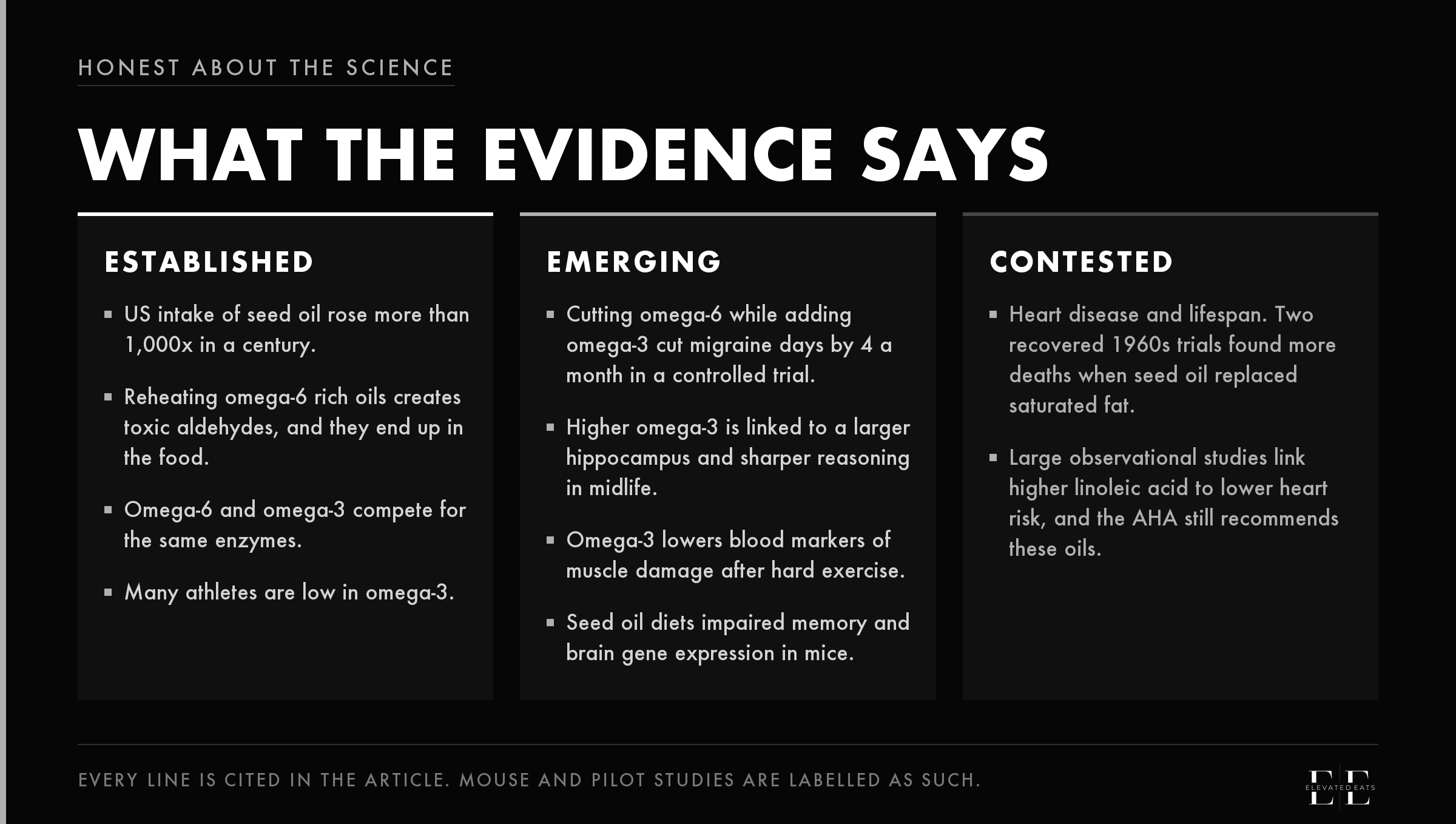
Two things sit firmly in the established column and deserve a closer look.
Heat breaks these oils down. Polyunsaturated fats, the kind seed oils are rich in, are the least stable under heat. A 2019 study in Scientific Reports found that frying in oils rich in them generated far higher levels of aldehydes, compounds the researchers describe as cytotoxic and genotoxic, than frying in a monounsaturated oil. Fries from fast food restaurants carried toxicologically significant levels, and the levels in food fried in sunflower oil climbed as the oil was reused.
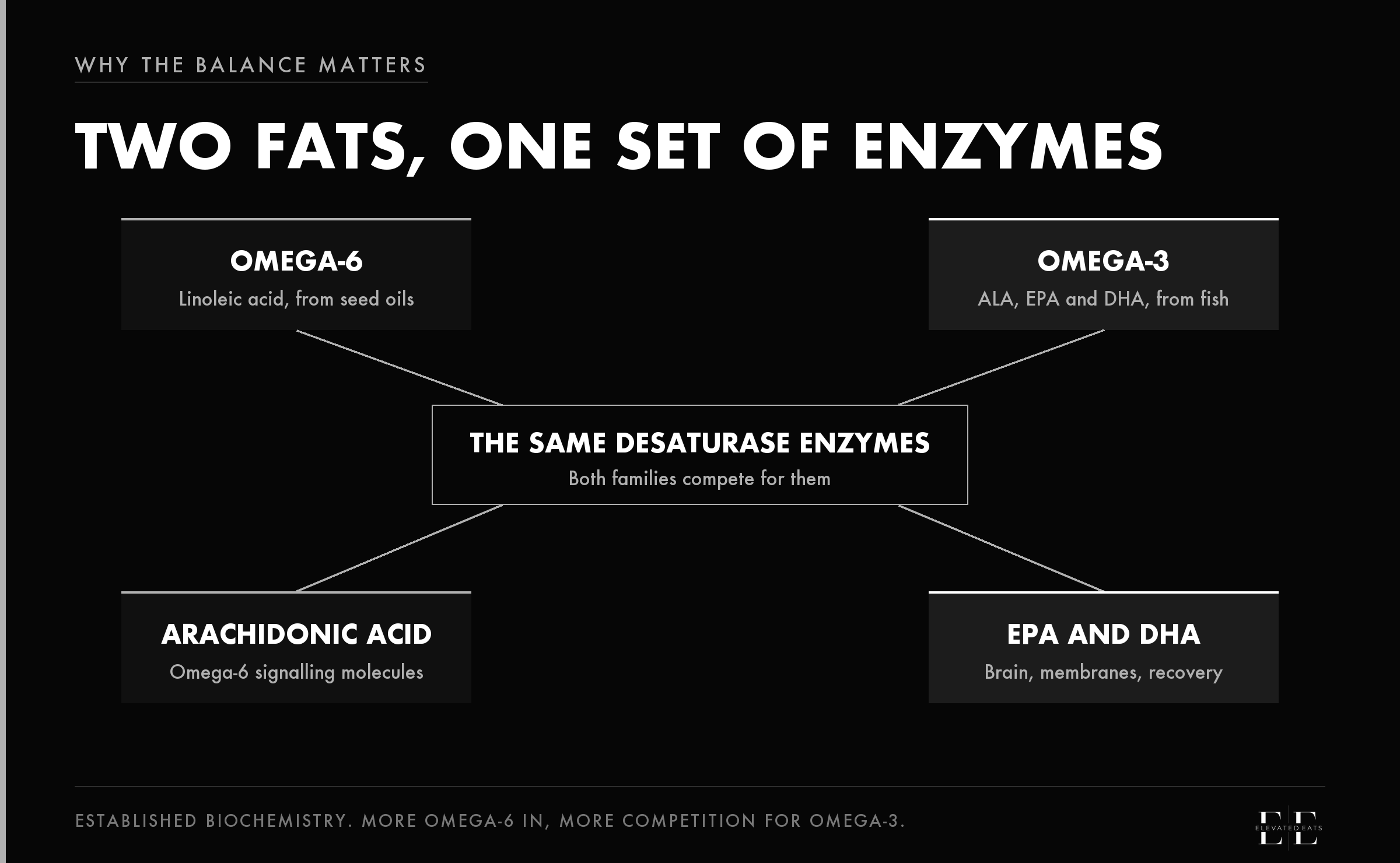
Omega-6 and omega-3 compete. The two families of fat are processed by the same desaturase enzymes. The more linoleic acid fills the diet, the more competition the omega-3 fats face, and omega-3 is where much of the research on the brain and recovery points.
Why seed oils get called inflammatory
You will hear it everywhere: seed oils are inflammatory. The real answer is more specific, and more useful.
The simple version does not hold up. The theory is that linoleic acid becomes arachidonic acid, which the body uses to make inflammatory prostaglandins, the same pathway ibuprofen blocks. The pathway is real. But in a systematic review of human trials, raising linoleic acid as much as sixfold did not raise arachidonic acid in the blood of adults eating Western diets. And a review of 15 randomized trials in healthy people found no rise in inflammatory markers like C-reactive protein.
The case that does hold up runs through oxidation and balance.
Heat damages it. Polyunsaturated fats are the easiest fats to damage with heat, and linoleic acid is by far the most common one in cooking oil. Its breakdown products include 4-HNE and malondialdehyde, which damage and kill cells at high levels, and they form in the fryer and the pan.
Oxidized linoleic acid builds up in you. In a 12-week randomized trial at the National Institutes of Health, cutting dietary linoleic acid lowered blood levels of oxidized linoleic acid metabolites, compounds researchers have linked to chronic pain and heart disease.
It makes cholesterol easier to oxidize. In an eight-week feeding study of adults with mildly high cholesterol, LDL from people on a diet rich in linoleic acid oxidized more readily than LDL from people eating oleic acid, the main fat in olive and avocado oil. The more linoleic acid in the LDL, the more it oxidized. Oxidized LDL is considered a key step in the buildup of arterial plaque.
It can crowd out omega-3. A 2018 review found evidence that a high omega-6 diet blunts the anti-inflammatory, inflammation-resolving effects of omega-3, while noting the interaction is still not fully understood. For anyone who trains hard, resolving inflammation is recovery.
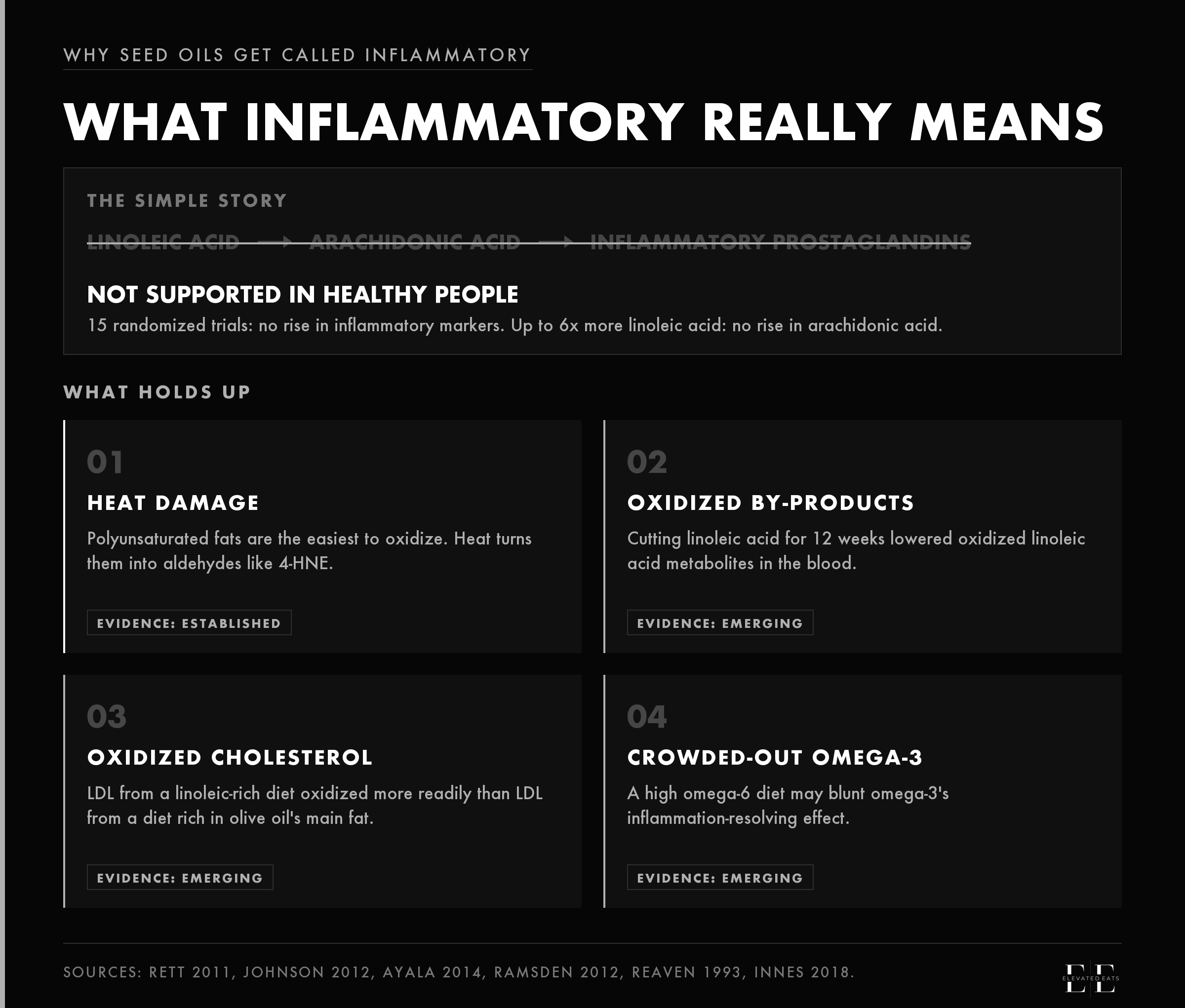
So the honest claim is not that seed oils set your body on fire. It is that they are among the easiest fats to damage, they leave damaged by-products behind, and in the amounts the modern diet delivers, they may get in the way of the fats your body uses to recover.
What it can cost a high performer
You do not measure yourself against average. So here is the research on the outputs you actually care about, each one labelled for how strong it is.
Mental clarity
EVIDENCE: EMERGING, CONTROLLED TRIAL
The clearest human signal comes from the way the brain handles pain. In a 2021 trial published in The BMJ, 182 adults with frequent migraines were given two thirds of their food for 16 weeks. Adding omega-3 alone reduced headache days by two a month compared with a control diet. Adding omega-3 and cutting linoleic acid to under 1.8% of calories reduced them by four.
Lowering the omega-6 doubled the effect on headache days. The diets changed the fat-derived signalling molecules involved in pain, the mechanism the researchers set out to test, although neither diet significantly improved a quality of life score.
To be clear about the limits: no reliable study has tied seed oils directly to brain fog, and anyone who promises that is ahead of the science.
Memory
EVIDENCE: EMERGING, ASSOCIATION AND ANIMAL STUDIES
In the Framingham Heart Study, among 2,183 adults with an average age of 46, higher omega-3 levels in the blood were linked to a larger hippocampus, the brain's memory center, and to better abstract reasoning. That is an association, and the authors call it exploratory.
In mice, the signal is sharper and less certain to apply to you. Six months of a canola-rich diet impaired working memory in a mouse model of Alzheimer's disease, and a soybean oil diet disrupted genes in the hypothalamus tied to inflammation and metabolism. Mouse studies do not prove what happens in people. They are why researchers keep asking.
Physical performance and recovery
EVIDENCE: EMERGING
A 2021 meta-analysis of randomized trials found that omega-3 supplementation lowered creatine kinase, lactate dehydrogenase and myoglobin after muscle damaging exercise. Those are the blood markers sports scientists use to track muscle damage.
And athletes are often short on omega-3. When researchers tested 404 NCAA Division I football players, a third had an Omega-3 Index in the high risk zone, and not one reached the low risk zone.
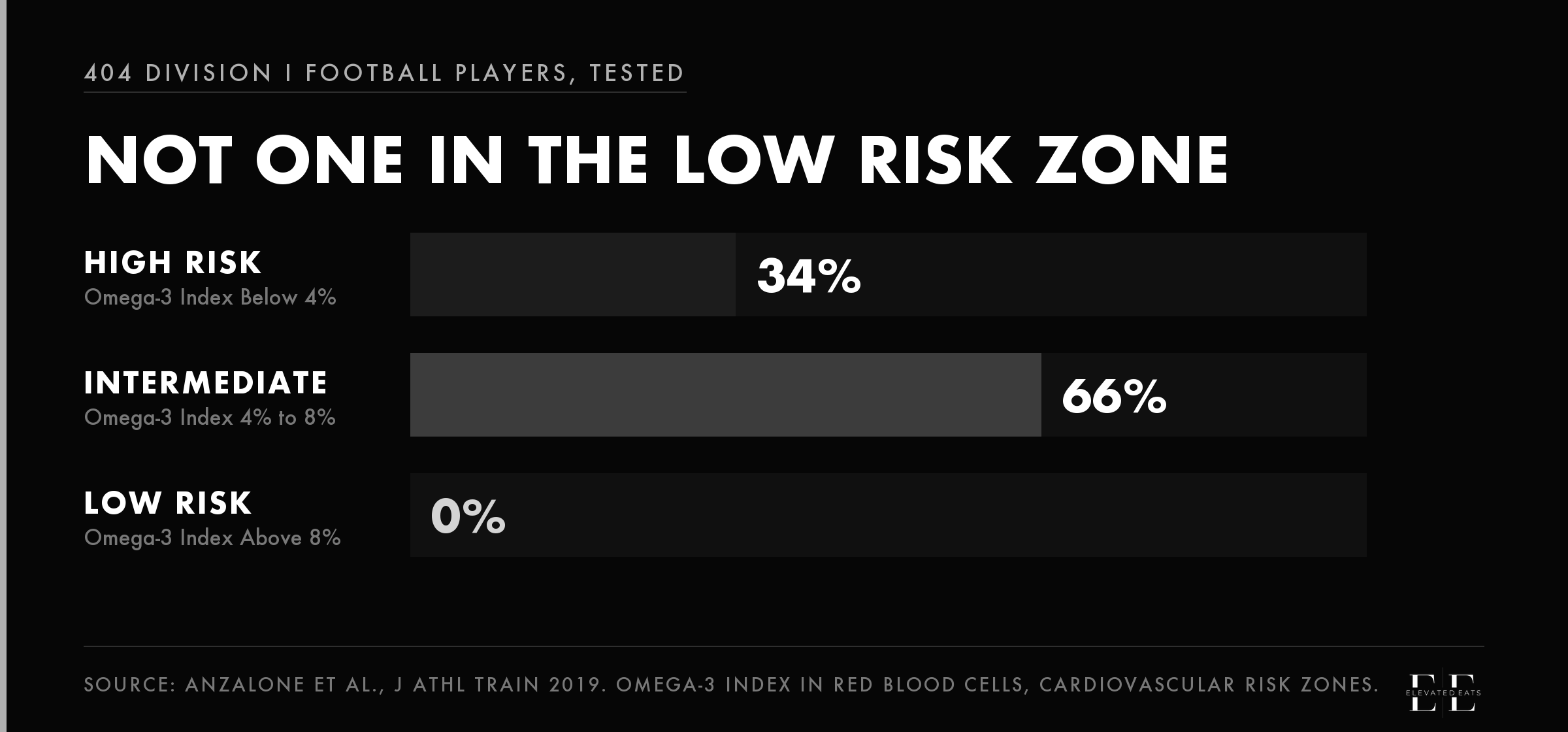
No trial has shown that seed oils directly slow an athlete's recovery. The logic is about balance: the more omega-6 fills the diet, the harder it is to keep omega-3 where the recovery research points.
Sleep
EVIDENCE: EARLY, PILOT DATA
Sleep is where the evidence is thinnest, and it would be dishonest to pretend otherwise. In an Oxford study of UK schoolchildren, lower blood DHA, an omega-3, was weakly linked to worse sleep. In a small pilot group of 43 children measured with wrist monitors, DHA supplementation meant 58 more minutes of sleep and seven fewer wake episodes a night.
It was children, and it was a pilot. It is a reason to protect omega-3 status, not proof about seed oils.
Longevity
EVIDENCE: CONTESTED
This is the fight you have probably heard about, and both sides have real data.
On one side are two trials from the 1960s and 70s whose full results stayed unpublished for decades. When researchers recovered the data from the Sydney Diet Heart Study, the men told to replace saturated fat with safflower oil, 221 of the 458 enrolled, died at a higher rate than the controls: 17.6% against 11.8%. In the recovered Minnesota Coronary Experiment, a corn oil diet lowered cholesterol by 13.8% but showed no benefit on survival, and every 30 mg/dL drop in cholesterol was linked to a 22% higher risk of death.
On the other side, the American Heart Association concluded in 2017 that replacing saturated fat with polyunsaturated vegetable oil reduced cardiovascular disease by about 30% in trials, and a 2019 pooled analysis of 30 studies and 68,659 people linked higher blood and tissue levels of linoleic acid to lower cardiovascular risk.
The honest answer is that the long term question is not settled. What is not in dispute is what repeated high heat does to these oils.
The question was never whether the science is finished. It was whether you want to be the experiment while it finishes.
Limited intake by city
Elevated Eats holds capacity per city, and every menu is designed from scratch, so plan on a 2 to 3 week lead time.
Your place in your city is held the day you commit.
Where seed oils hide
If seed oils were only in junk food, avoiding them would be easy. They are not. They are in the places high performers eat every week.
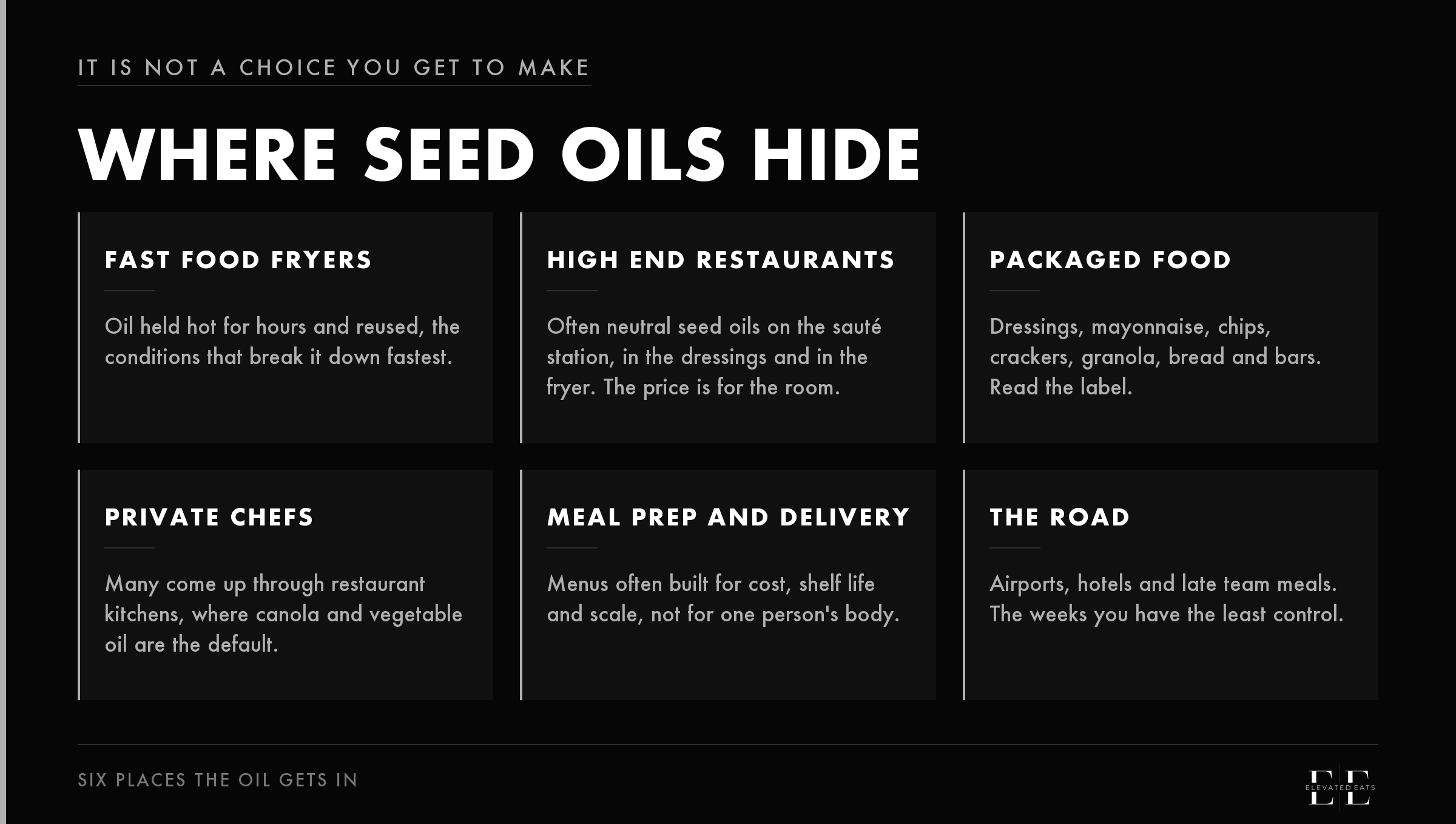
Fast food. Fryers run for hours and the oil is reused, which is exactly the condition under which the aldehyde research found levels climbing.
High end restaurants. A great kitchen is judged on flavor, and neutral seed oils are useful tools: they disappear into a dish and tolerate a hot pan. Many expensive restaurants use them on the sauté station, in vinaigrettes and aiolis, and in the fryer. The menu will tell you the farm the chicken came from. It will rarely tell you the oil.
Packaged food. Turn over a bottle of salad dressing, a jar of mayonnaise, a bag of chips, a box of crackers or a protein bar, and soybean, canola, sunflower or safflower oil is often on the list.
Private chefs. A private chef can be brilliant and still reach for canola. Many come up through restaurant kitchens, where neutral seed oils are standard, and a chef cooks the way they were trained unless someone sets a different standard and checks it.
Meal prep and delivery. Services built for scale often make ingredient decisions around cost and shelf life.
The road. Airports, hotels and the late meal after a game or a board dinner. The weeks you have the least control are the weeks you need it most.
Why willpower is not a strategy
To avoid seed oils on your own, you would have to question every server, read every label, vet every chef, and keep doing it in a hotel at eleven at night. And you would have to read the labels again, because products change their recipes: a sauce that was clean when you first checked it can pick up a seed oil in a later version. Most people can shrug that off. You cannot, because your body is the instrument you perform with.
Discipline is finite. It belongs in your training, your recovery and your work, not in cross-examining a kitchen.
How Elevated Eats keeps seed oils out
Elevated Eats does not ask you to trust a promise. It runs a system with six checkpoints between an ingredient and your plate.
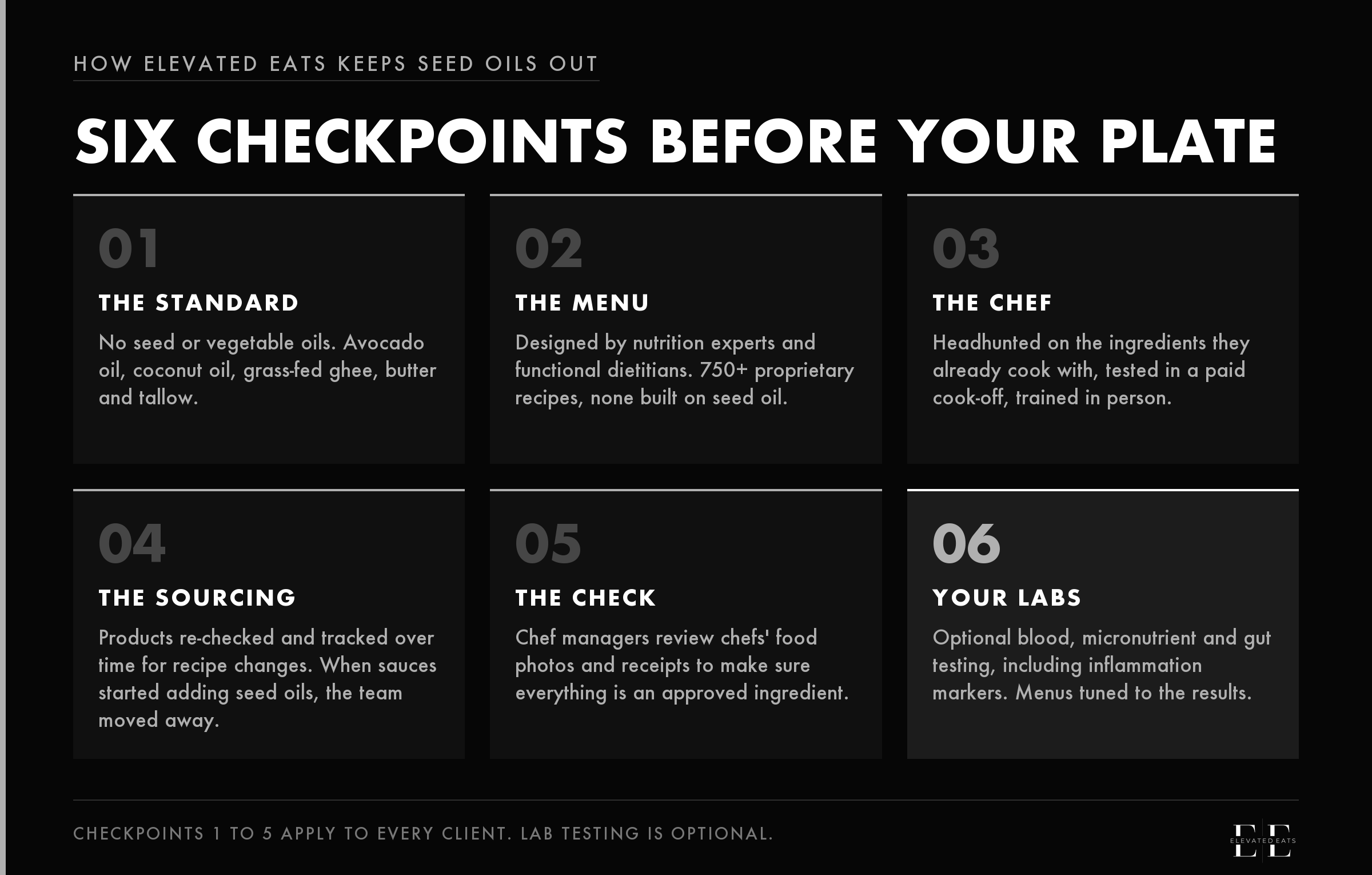
1. The standard. Elevated Eats does not cook with seed or vegetable oils. Meals are cooked with fats like avocado oil, grass-fed ghee, butter and tallow, and snacks are made with coconut oil. These fats hold up to heat better than polyunsaturated oils.
2. The menu. Every menu and recipe is designed by nutrition experts and functional dietitians, drawing on 750+ proprietary recipes built without seed oils, and then built around your body, your training and your schedule.
3. The chef. Elevated Eats chefs are headhunted, not hired off a job board, and the first thing screened is the ingredients they already cook with. Then come interviews, reference and background checks, a paid sample menu cook-off, and in-person training.
4. The sourcing. An ordering team buys ingredients online wherever it can, to control quality and keep variability down. Meat comes from vetted ranches and ships directly to each chef.
Approving an ingredient once is not enough, because products change. The Elevated Eats sourcing team keeps checking the products it uses for changes in their ingredients and tracks them over time. When sauces Elevated Eats had been using started adding seed oils, the team caught it and moved away from them. You never saw the switch. That is the point.
5. The check. Chef managers review chefs' food photos and receipts to make sure everything is an approved ingredient. Photos show what was cooked. Receipts show what was bought.
6. Your labs. For clients who want the data, optional testing covers a comprehensive blood panel including hormones, thyroid, inflammation, electrolytes and advanced heart health, plus micronutrients and the gut microbiome. The results guide four months of additional menu customization, and optional before and after testing shows what changed.
It is the same standard Elevated Eats has cooked to for more than 300 professional athletes and their families.
What you can do today
Whether or not you ever work with Elevated Eats, these steps cut your exposure this week:
- Ask what the kitchen cooks with. Olive oil, butter and ghee are all reasonable requests at a good restaurant.
- Choose grilled, roasted or steamed over fried. Fryer oil is the most heat-damaged oil in the building.
- Take dressing on the side, or ask for olive oil and lemon.
- Read labels for soybean, canola, corn, cottonseed, sunflower, safflower and the words vegetable oil.
- Eat fatty fish like wild salmon and sardines regularly for EPA and DHA.
- Know your number. An Omega-3 Index blood test measures your omega-3 status directly.
Frequently asked questions
What are seed oils?
Refined oils extracted from the seeds of industrial crops: soybean, corn, canola, cottonseed, sunflower, safflower and grapeseed. On an ingredient list they often appear simply as vegetable oil. Most are rich in linoleic acid, an omega-6 fat.
Is canola oil a seed oil?
Yes. Canola comes from rapeseed. It is lower in linoleic acid than soybean or corn oil, but it is a refined seed oil, and canola is one of the oils Elevated Eats does not cook with.
Are olive oil and avocado oil seed oils?
No. Both are pressed from the fruit of the plant, not the seed, and both are mostly monounsaturated fat, which holds up better to heat than the polyunsaturated fat in seed oils.
Are seed oils inflammatory?
Not in the simple sense. Randomized trials in healthy people have not found that eating more linoleic acid raises inflammatory markers. The better supported concerns are oxidation and balance: seed oils are among the easiest fats to damage with heat, cutting linoleic acid lowers oxidized by-products in the blood, linoleic-rich diets make LDL cholesterol easier to oxidize, and a high omega-6 diet may blunt the inflammation-resolving effects of omega-3.
Is it proven that seed oils are harmful?
Not in every respect, and anyone who says otherwise is ahead of the science. It is established that intake rose enormously over the last century, that these oils form toxic aldehydes under repeated high heat, and that omega-6 competes with omega-3 in the body. Effects on the brain and recovery are emerging. The long term heart question is contested, with serious research on both sides.
Butter, ghee and tallow are saturated fats. Is that not a problem too?
Saturated fat has its own debate, and the American Heart Association recommends limiting it. Elevated Eats uses these fats for cooking because they hold up to heat, alongside avocado oil. How much fat of each kind ends up in your week is set by the nutrition team around your goals and, if you choose testing, your labs.
Do I still get the omega-6 my body needs?
Yes. Linoleic acid is an essential fat, and it is found in whole foods like nuts, seeds, eggs and poultry. Taking refined seed oils out of the kitchen removes the concentrated, heat-damaged source, not the nutrient.
What happens when a product changes its recipe?
Elevated Eats' sourcing team keeps checking the products it uses for ingredient changes and tracks them over time. When sauces it had been using started adding seed oils, the team moved away from them.
Does Elevated Eats use seed oils anywhere?
No. Elevated Eats does not cook with seed or vegetable oils in meals or snacks. Meals are cooked with fats like avocado oil, grass-fed ghee, butter and tallow, and snacks are made with coconut oil.
Sources
- Blasbalg TL, et al. Changes in consumption of omega-3 and omega-6 fatty acids in the United States during the 20th century. Am J Clin Nutr, 2011. Link
- Guyenet SJ, Carlson SE. Increase in adipose tissue linoleic acid of US adults in the last half century. Adv Nutr, 2015. Link
- Simopoulos AP. The importance of the ratio of omega-6/omega-3 essential fatty acids. Biomed Pharmacother, 2002. Link
- Moumtaz S, et al. Toxic aldehyde generation in and food uptake from culinary oils during frying practices. Sci Rep, 2019. Link
- Ramsden CE, et al. Dietary alteration of n-3 and n-6 fatty acids for headache reduction in adults with migraine: randomized controlled trial. BMJ, 2021. Link
- Satizabal CL, et al. Association of red blood cell omega-3 fatty acids with MRI markers and cognitive function in midlife: the Framingham Heart Study. Neurology, 2022. Link
- Lauretti E, Praticò D. Effect of canola oil consumption on memory, synapse and neuropathology in the triple transgenic mouse model of Alzheimer's disease. Sci Rep, 2017. Link
- Deol P, et al. Dysregulation of hypothalamic gene expression and the oxytocinergic system by soybean oil diets in male mice. Endocrinology, 2020. Link
- Xin G, Eshaghi H. Effect of omega-3 fatty acids supplementation on indirect blood markers of exercise-induced muscle damage: systematic review and meta-analysis. Food Sci Nutr, 2021. Link
- Anzalone A, et al. The Omega-3 Index in National Collegiate Athletic Association Division I collegiate football athletes. J Athl Train, 2019. Link
- Montgomery P, et al. Fatty acids and sleep in UK children: subjective and pilot objective sleep results from the DOLAB study. J Sleep Res, 2014. Link
- Rett BS, Whelan J. Increasing dietary linoleic acid does not increase tissue arachidonic acid content in adults consuming Western-type diets: a systematic review. Nutr Metab, 2011. Link
- Johnson GH, Fritsche K. Effect of dietary linoleic acid on markers of inflammation in healthy persons: a systematic review of randomized controlled trials. J Acad Nutr Diet, 2012. Link
- Ayala A, et al. Lipid peroxidation: production, metabolism, and signaling mechanisms of malondialdehyde and 4-hydroxy-2-nonenal. Oxid Med Cell Longev, 2014. Link
- Ramsden CE, et al. Lowering dietary linoleic acid reduces bioactive oxidized linoleic acid metabolites in humans. Prostaglandins Leukot Essent Fatty Acids, 2012. Link
- Reaven P, et al. Effects of oleate-rich and linoleate-rich diets on the susceptibility of low density lipoprotein to oxidative modification in mildly hypercholesterolemic subjects. J Clin Invest, 1993. Link
- Innes JK, Calder PC. Omega-6 fatty acids and inflammation. Prostaglandins Leukot Essent Fatty Acids, 2018. Link
- Ramsden CE, et al. Use of dietary linoleic acid for secondary prevention of coronary heart disease and death: recovered data from the Sydney Diet Heart Study. BMJ, 2013. Link
- Ramsden CE, et al. Re-evaluation of the traditional diet-heart hypothesis: recovered data from the Minnesota Coronary Experiment (1968-73). BMJ, 2016. Link
- Sacks FM, et al. Dietary fats and cardiovascular disease: a presidential advisory from the American Heart Association. Circulation, 2017. Link
- Marklund M, et al. Biomarkers of dietary omega-6 fatty acids and incident cardiovascular disease and mortality: pooled analysis of 30 cohort studies. Circulation, 2019. Link
Keep reading

Performance nutrition by invitation
You should not have to interrogate a waiter
to protect your performance.
Elevated Eats accepts a limited number of new clients per city.
Every application is reviewed individually. Elevated Eats only takes clients it can genuinely serve.
Apply to work with Elevated Eats →NHL · MLB · NFL · NBA · FOUNDERS · EXECUTIVES